
Quality and Traceability
See The Issues.
Record The Decisions.
Keep inspections, non-conformances and quality decisions alongside the jobs and material they relate to. See what needs attention, who owns it and when it is due.
See Quality In ActionExplore Quality Working
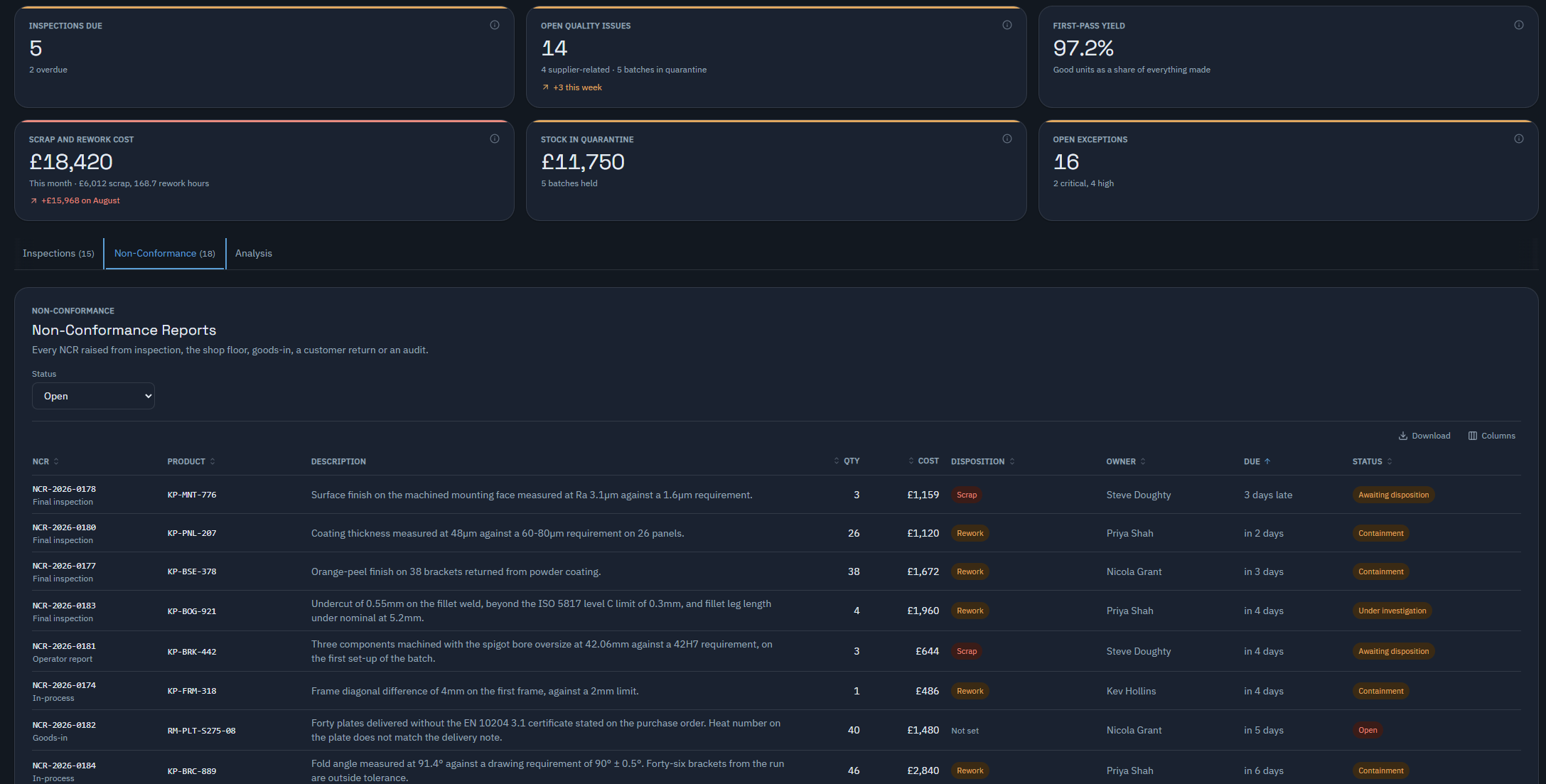
From Check to Decision
Inspect The Work. Track The Issue. Record The Outcome.
Give the quality team a shared record of the checks and decisions behind each job.
1 · Inspections
See Which Checks Are Due
Review goods-in, first-off, in-process and final inspections. Record results against the relevant work so the next person can see what was checked.
2 · Non-Conformances
Keep Open Issues Visible
Record the problem, affected quantity, owner and due date. Follow the investigation and disposition in the issue record rather than relying on a separate list or email chain.
3 · Release and Hold
Record The Quality Decision
Review inspection results and outstanding issues before recording a release or hold. The job’s quality record shows the decision for the team handling the next step.
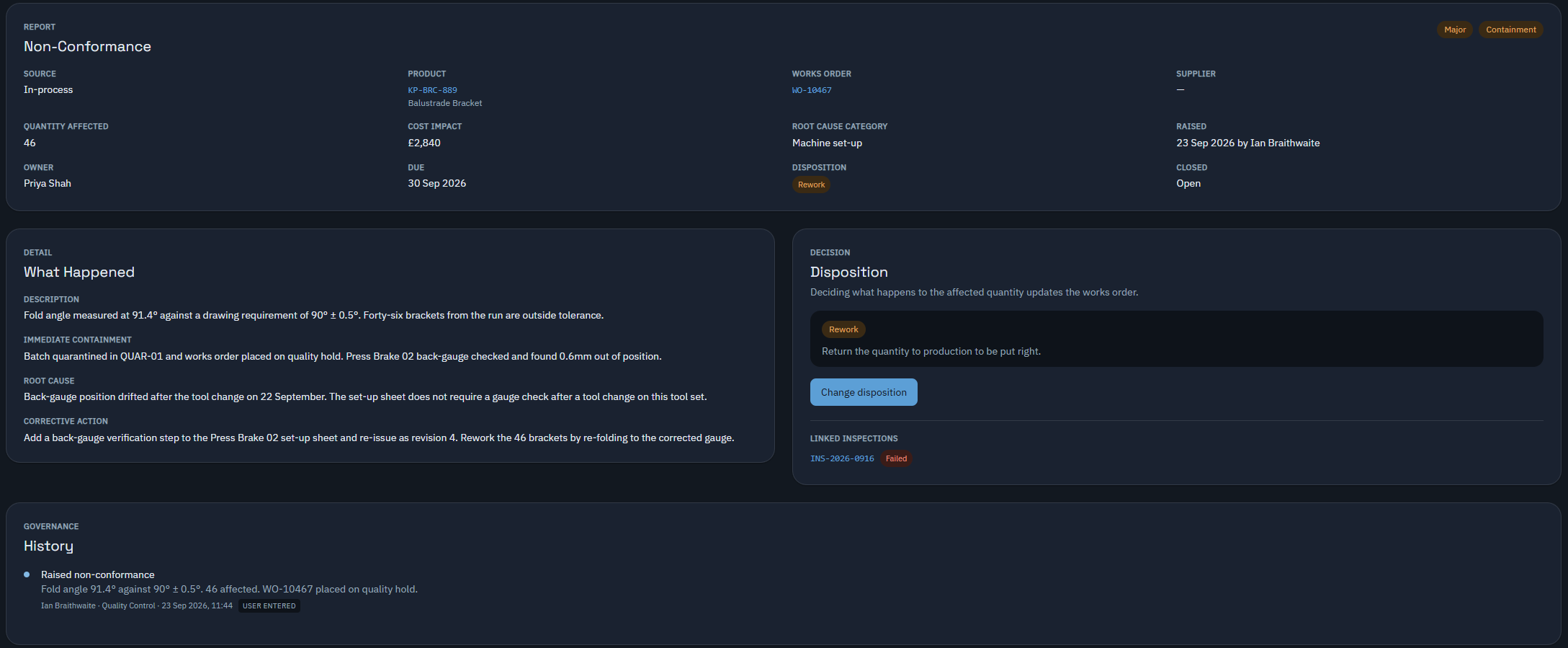
Non-Conformance Reports
Keep The Problem, Investigation And Decision Together
Record what happened, the affected quantity and immediate containment. Add the cause, corrective action and disposition, with the linked inspection and history available in the same report.
Material and Job Records
Follow The Recorded Lot References
Traceability relies on recording the links when material is received, issued and despatched. Use those links to investigate which jobs and consignments are affected.
Investigate A Suspect Batch
Review the jobs that used the same recorded lot when assessing the extent of a quality problem.
Keep Concessions With The Decision
A use-as-is disposition requires a recorded written concession. Keep that reference with the issue so the decision can be reviewed later.
Use The Records For Customer Evidence
Follow recorded lot and heat references through material issues, works orders and consignments. The evidence is only as complete as the links your team records.
Through to Despatch
Keep Quality Decisions With The Production Record
Review Progress And Quality Together
Completed quantities and quality release are different records. Review both when deciding which parts are ready for the next step.
Prepare Consignment Certificates
Certificates of conformity are issued for a consignment using its recorded lines and linked job and material information.
Keep The Responsibility Clear
The records support your quality procedures and customer requirements. Your team remains responsible for inspection, acceptance and release decisions.
Measurement evidence
Keep The Measurement And The Instrument Together
Record the measured value against its tolerance, and keep the instrument and its calibration as they stood on the day of the inspection.
A simplified drawing, not a screenshot. Pass or fail is calculated in exact decimals with both limits counted as inside, so a result on the limit is a pass rather than a rounding argument.
The Instrument Is Part Of The Record
A check names the instrument it was measured with, or records that it was visual. The instrument that was used is written into the inspection record along with its calibration date and due date as they were that day, so a later recalibration does not rewrite what the inspection said.
Where numeric values are given, the judgement replaces a tick. Where they are not, the check is still recorded as a check.
An Unsuitable Instrument Is Refused
An instrument that is overdue for calibration, has failed it, has been retired, has been returned or is not on the register cannot be recorded against a check. The refusal names the check, rather than failing quietly.
Measuring equipment and calibration records are part of Factory and above.
One heat, end to end
Follow The Material From Receipt To Despatch
Provenance is recorded as the material moves, not reconstructed from a report afterwards. Select a stage to see what was recorded there.
A simplified drawing, not a screenshot. The certificate quotes what was recorded at each step rather than what is retyped at the end.
Which Controls Apply Is Your Decision
Quality requirements are configured per site and stamped on a customer, a part, an order line or a job, so the controls follow the work that needs them rather than applying to everything. The switches available are controlled review, first-off at every step, final inspection, material certificate, certificate of conformity, traced material only, and an instrument required on every check.
Serial-numbered units can be named through issue, despatch and returns where a site turns that on. None of these is on by default, and nothing here makes a factory AS9100 compliant or audit-ready on its own: they are the records an auditor asks to see, kept in a form that can be produced.
See It Working
Follow An Inspection Through To Its Outcome
A product walkthrough shows inspections, non-conformances, concessions and recorded release decisions. Recorded lot and heat provenance and certificates of conformity are included in Core. The quality controls on this page — inspections, release and hold, non-conformances and concessions — are included in Factory and Connected Factory.